 SimSmsBox
 Short answer: It depends which kind of “virtual number” you hold. VoIP numbers, CPaaS numbers and carrier second lines can dial out and take calls. Numbers rented per code from an SMS platform almost never can — the SIM isn’t yours, and what you bought was read access to one inbox.
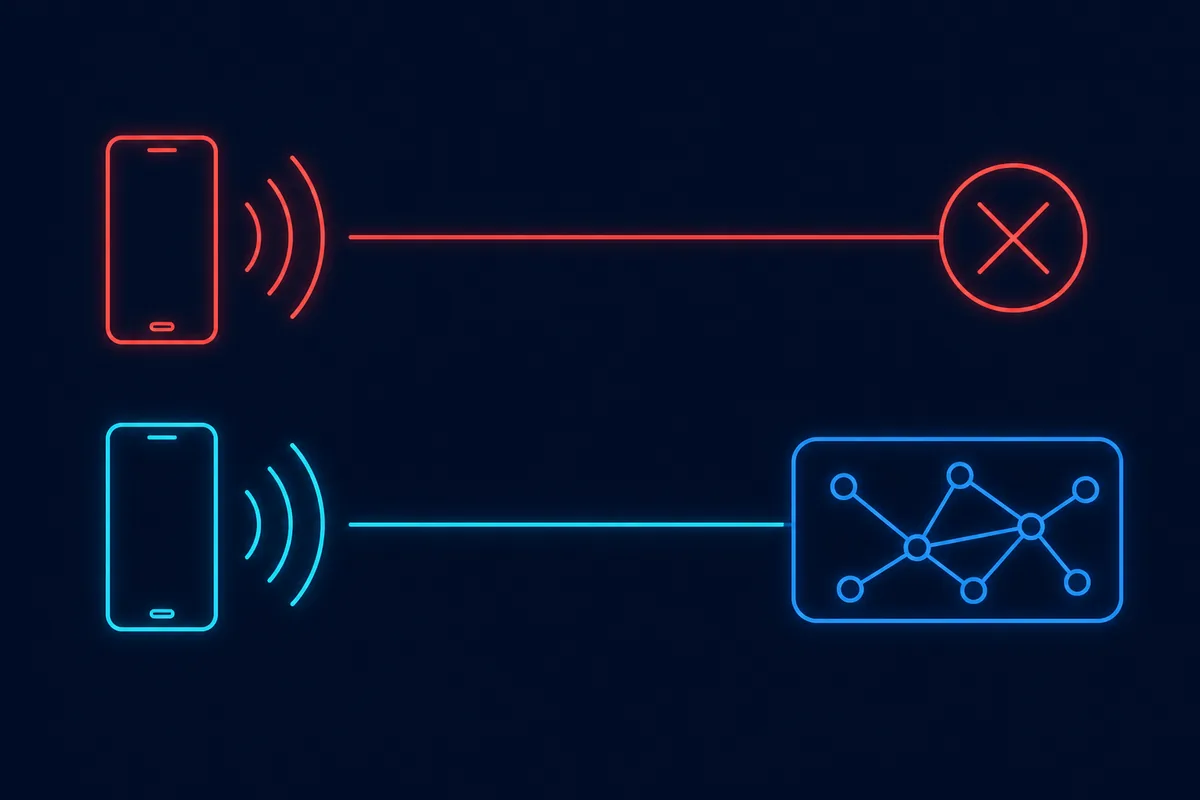
“Virtual number” is a single phrase covering at least four different products. Whether it can make a call has no universal answer, so the useful move is to split the category first.
Calling ability by type
| Type | Typical example | Can dial out | Can receive calls | What you actually control |
|---|---|---|---|---|
| Carrier second line / eSIM | An extra line from your operator | Yes | Yes | A real SIM or eSIM |
| VoIP number | Google Voice, Skype Number | Yes | Yes | An account and a client app |
| CPaaS number | A number leased through an API | Yes, with setup | Yes, with forwarding configured | The number’s routing rules |
| SMS platform pool number | A number rented per code | No | Usually no | Read access to one inbox |
There is exactly one dividing line: whose device the voice path terminates on. If it lands in your handset’s baseband or in an app you’re signed into, you can talk. If it lands on hardware in a provider’s rack, all you get is a web page showing the texts it received. The underlying mechanics are in what is a virtual phone number and what is a non-VoIP number.
Why SMS platforms don’t let you dial
This isn’t stinginess. Three constraints stack up:
- The cost shape is different. A text is a single event. Voice bills by the minute and can be pointed at expensive international destinations, so one abused line can burn a platform’s margin in minutes.
- Liability can’t be separated. The number sits in the provider’s name. Receiving a message is passive; placing a call is an act, and nuisance or fraud calls come back to the account holder. The legal exposure isn’t in the same league.
- The number is about to belong to someone else. One-time numbers often live for minutes before returning to the pool — see SMS number sourcing explained. Provisioning voice on a line that is about to rotate makes no sense.
So when a service advertises “you can make calls too”, check whether what’s on sale is a pool number or a dedicated long-term rental. Those are different products wearing the same label.
Then what is a voice OTP?
Some platforms genuinely support voice verification, which is why people assume pool numbers can talk. Two different capabilities are getting mixed up:
- Answering and transcribing. The provider’s equipment picks up, recognises the spoken digits, and shows them to you. You never dialled anything and never heard the call.
- Placing a call. You initiate. Pool numbers can’t.
How the mechanism works is covered in what is a voice OTP.
Pick the route by purpose
You just need someone to be able to call you back. This shows up after signup: manual review calls, a courier trying to reach you, support confirming an order. A pool number breaks that chain, so use a VoIP line or a carrier second line.
You want to dial local numbers in another country. VoIP bills by destination and costs far less than roaming — but the recipient sees an unfamiliar country on caller ID, and answer rates suffer.
You want a long-term work line. A carrier second line or eSIM is the sturdy answer, because the number is a normal on-network subscription in the carrier’s HLR. If eSIM is your plan, read can you use an eSIM to receive SMS codes.
You only need to pass one verification. Then calling ability is irrelevant and a per-code number is the cheapest path — see overseas SMS verification tutorial.
Four ways this goes wrong
- Assuming a receive-only number can take a callback. Banks, payment processors and manual review teams phone you. A pool number can’t answer, and the review fails.
- Using VoIP where a driver has to reach you. Rideshare, delivery and courier flows depend on a local call connecting, and some VoIP ranges can’t be reached from local handsets.
- Expecting VoIP to reach emergency services. Internet calling offers no guarantee for emergency numbers and often can’t convey your location.
- Caller ID that doesn’t match the number’s origin. Once a line gets flagged as spam, answer rates decline steadily — see phone number reputation and what is phone number spoofing.
Real SIM or virtual line?
If the number has to carry the job of being reachable, don’t hand that job to a disposable line. The full comparison is in real SIM vs virtual numbers, and the cost of each acquisition route is in how to get a virtual phone number.
Summary
Calling ability follows the voice path. VoIP lines and carrier second lines can talk; SMS pool numbers only listen for texts. If people need to reach you, don’t use a disposable number — and if you only need one code, don’t pay for a capability you’ll never use.