 SimSmsBox
 Short answer: A virtual phone number is a line that works without a SIM card in your hand — a provider assigns it and forwards the messages to you. Whether it can receive verification codes depends on the number range underneath it, not on the word “virtual.”
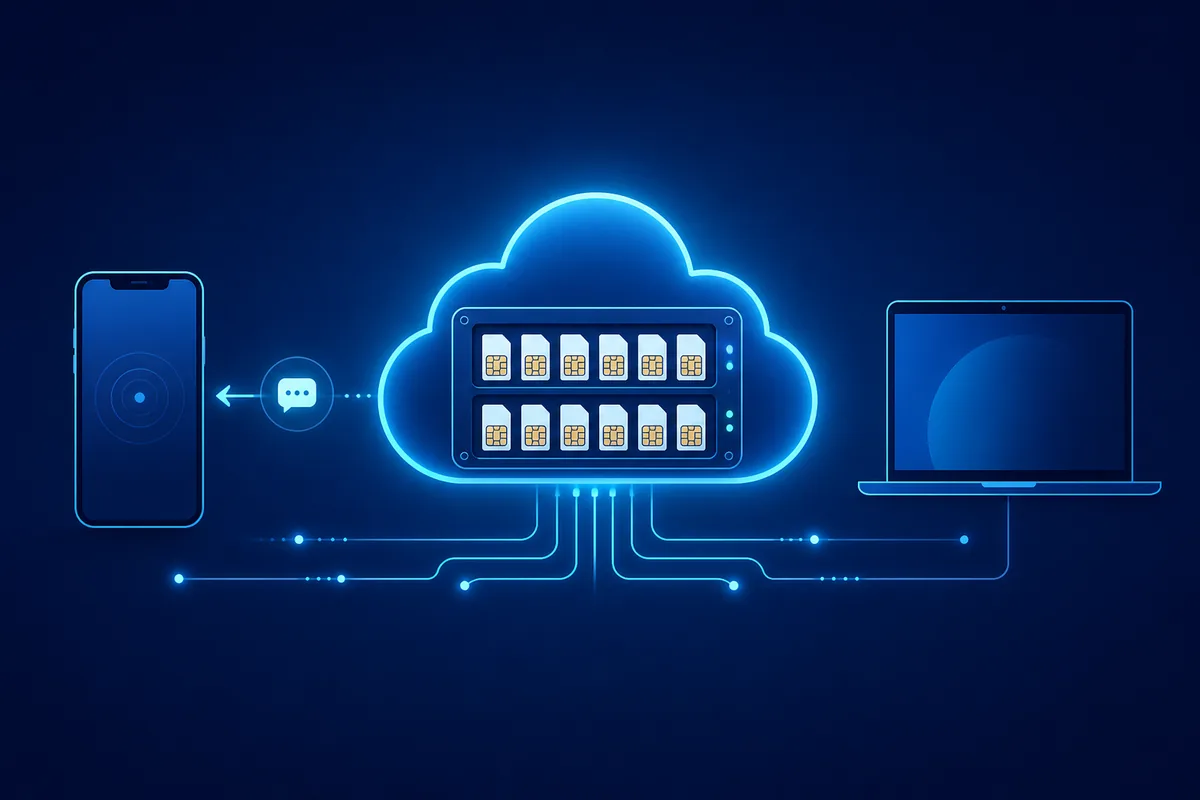
Most people reach this question after finding a site that shows incoming texts in a browser. The useful framing is not “is this legit” but “what is this number made of.”
One definition, three consequences
A virtual number separates the right to use a number from the hardware that holds it. No SIM in your pocket, yet the SMS reaches you, because a provider’s system relays it.
That separation has three consequences:
- You are not the registered owner. The provider is.
- The number gets recycled. Disposable lines move to someone else within minutes. See phone number recycling.
- Its origin decides everything. The number range is what apps actually judge.
Four types, very different outcomes
| Type | What’s underneath | OTP success rate | Fits |
|---|---|---|---|
| Real-SIM pool | Carrier SIMs in real hardware | High | Strict app signups |
| eSIM | Carrier-issued, no plastic | High | Long-term personal use |
| VoIP number | Internet-telephony range | Low, often refused | Calls, not verification |
| Public shared inbox | Number is public, so is the inbox | Very low | Throwaway tests only |
The first two look like ordinary numbers to most platforms. The last two get flagged. What is a non-VoIP number explains the detection side, and real SIM vs virtual numbers compares them head to head.
Where it works, where it doesn’t
Reasonable uses:
- Throwaway or trial accounts you would not miss
- Keeping your real number away from unknown sites — see how to protect your phone number privacy
- Cross-border work that needs a code delivered to a specific country
Do not use one for:
- Banking, exchanges, or payment accounts. Once the number is recycled, your recovery path is gone and money can go with it. Use your own long-term number for funded accounts, and prefer an authenticator app for 2FA.
- A main account you intend to keep for years
- Anything that calls you back and checks where the number is registered
Why some virtual numbers never receive the code
The failure is usually upstream of you:
- The app blacklists the range and simply never sends.
- The carrier filters it as bulk A2P traffic — see why carriers filter SMS.
- Reputation is exhausted because the same line signed up hundreds of times. See phone number reputation.
A full triage order lives in why your virtual number isn’t receiving SMS.
Wrap-up
“Virtual” is not a quality rating. Real-SIM pools and eSIMs behave like ordinary numbers; VoIP and public inboxes rarely clear verification. Good for isolation and testing, wrong for anything holding money.