 SimSmsBox
 Quick answer: A real SIM number is a carrier-issued mobile number that lives in a physical device or number pool, so target apps treat it as a “real person” number — high delivery rates, few rejections. A virtual number (VoIP / online number) is cheap and instant, but its number ranges are easy to detect and are increasingly blocked. Use real SIM numbers for important or heavily-protected services (Telegram, finance, AI tools); only use virtual numbers for one-off, low-risk sign-ups.
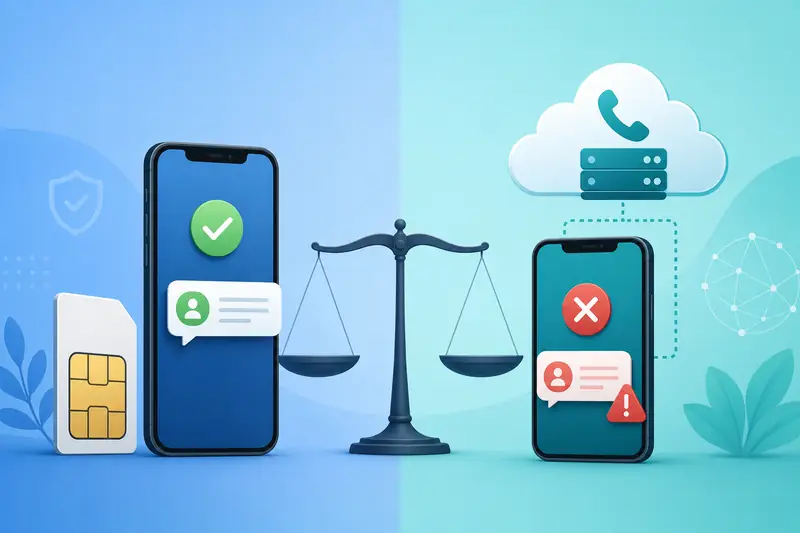
When SMS verification fails, most people blame the platform. The real dividing line is usually the origin of the number — whether it is a genuine SIM card or a network-generated virtual number. These two types differ sharply in delivery rate, ban risk, and price. Here is how to tell them apart.
1. What each type actually is
Real SIM numbers
A real SIM number is officially issued by a mobile carrier and can be inserted into a real phone or a number-pool device. It has a proper home location, normal signaling paths, and complete carrier-side records. To a target app it looks no different from the number in your own phone, which gives it the highest chance of passing as a genuine number.
Virtual numbers (VoIP / online numbers)
A virtual number does not rely on a physical SIM. It is generated through Voice over IP (VoIP) or number-forwarding services, and a single server can control thousands of them. The upside is that they are cheap and instant; the downside is that their ranges are concentrated and heavily reused, so they often land on the “high-risk range” blocklists that big platforms maintain.
2. Key differences at a glance
| Factor | Real SIM number | Virtual number (VoIP) |
|---|---|---|
| Delivery success | High, even for popular apps | Low–medium, often rejected |
| Ban / risk-control risk | Lower | Higher |
| Price | Slightly higher | Cheap |
| Service coverage | Wide | Narrow; many apps block it |
| Stability | Stable | A blocked range dies in bulk |
| Best for | Important, strict sign-ups | One-off, low-risk sign-ups |
3. Why so many platforms reject virtual numbers
Major platforms — especially Telegram, WhatsApp, Google, and most financial and AI services — maintain a database of known VoIP ranges. When the number you enter falls into one of them, the system may:
- Immediately warn that “this number can’t be used for verification”;
- Pretend to send an SMS but never actually deliver one;
- Let you register, then ban the account later as “suspicious.”
That is why “code received but verification fails” and “registered but banned quickly” are so often tied to virtual numbers. For a deeper troubleshooting path, see How to receive SMS online without a SIM card.
4. How to choose by scenario
- Important, long-term accounts: use a real SIM number — ideally your own physical number. Don’t cut corners here.
- Strict services (Telegram, finance, AI): prefer real SIM numbers and keep your IP in the same country as the number.
- One-off, low-risk sign-ups: a virtual number is fine and cheaper — use it and discard it.
- Cross-border e-commerce / bulk accounts: go hybrid — real SIM for core accounts, virtual for peripheral ones to control cost.
5. How to tell a real SIM from a virtual number
- Check the label: reliable platforms separate “real SIM / physical numbers” from “virtual numbers” and price them differently.
- Check the price: suspiciously cheap numbers with seemingly unlimited supply are usually virtual.
- Test it: spend the smallest amount and run one real verification against your target service. If it delivers reliably and passes, it is genuinely usable. For a full evaluation method, see What is an OTP code.
FAQ
Q: Are virtual numbers completely useless? No. For low-risk, one-off sign-ups they work fine and cost less. Just don’t use them for strict services like Telegram or finance.
Q: Do real SIM numbers always succeed? High success, but not 100%. You still need the right country, a matching IP, and enough patience for the SMS countdown.
Q: Why does one number work on an app while another doesn’t? Usually number-source differences: a real SIM pool versus a flagged virtual range. Switching to a real number often fixes it.
Takeaway
Real SIM versus virtual is essentially a trade-off between acceptance and cost. Keep one rule in mind: the more important the account and the stricter the platform, the more you should use a real SIM number. Save virtual numbers for throwaway sign-ups. Get the number right and you’re already halfway to a successful verification.