 SimSmsBox
 Quick answer: “Number sourcing” is where an SMS platform’s numbers come from. It splits into two families: real SIM pools (physical SIMs in real devices, carrier-issued) and virtual numbers (VoIP / network-generated). The source directly decides delivery rate, ban risk, and price — real SIM pools are pricier but stable, virtual numbers are cheap but often rejected. Choosing a platform is essentially choosing a number source.
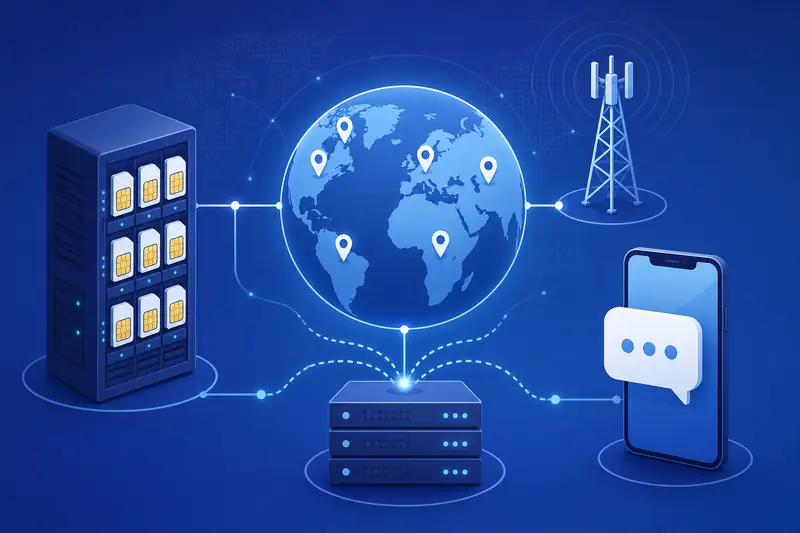
Many people pick an SMS platform by price and country coverage alone, ignoring the one thing that matters most: the number source. For the same country, a real SIM pool and a virtual pool can differ in delivery rate by nearly double. This guide helps you see through to the source.
1. What number sourcing actually is
Sourcing refers to where the batch of numbers a platform offers you actually comes from and how it’s maintained. There are two main types:
Real SIM pools
The platform inserts many physical SIM cards into “SIM banks” (pool devices). The numbers are carrier-issued with complete home-location records. To target apps they look like real-person numbers, so delivery rates are high.
Virtual pools (VoIP / network numbers)
Generated in bulk via VoIP or number-forwarding services — low cost, huge quantity, but concentrated ranges that apps easily place on high-risk lists.
For how the two behave in practice, see Real SIM vs virtual numbers.
2. How sourcing affects you
| Factor | Real SIM pool | Virtual pool |
|---|---|---|
| Delivery success | High | Low–medium |
| Risk control / bans | Fewer | More |
| Price | Slightly higher | Cheap |
| Stability | Stable | A blocked range dies in bulk |
| Best for | Important, strict services | One-off, low-risk |
Whether a platform delivers reliably largely comes down to whether it’s built on real SIM pools or piles of cheap virtual numbers.
3. Why good sourcing is hard — and not free
Real SIM pools require buying actual SIMs, running SIM banks, warming numbers, and rotating them. The operating cost is high, so real numbers can’t be unlimited or given away for free. When you see “unlimited free numbers” or “rock-bottom unlimited,” it’s almost certainly virtual. On the truth about free numbers, see Are free SMS numbers reliable.
4. How to pick a platform by its source
- Check whether it separates sources. Reliable platforms label “physical SIM / virtual” and price them separately.
- Check the no-code-no-charge policy. It signals confidence in the source.
- Test with a small spend. Run one verification against your target service to confirm the real delivery rate.
For a fuller checklist, see How to protect your phone number privacy.
FAQ
Q: Why do different platforms in the same country vary so much in delivery? Because the source differs. One is built on real SIM pools, the other on virtual numbers — of course delivery differs.
Q: Are virtual sources completely useless? No. For low-risk, one-off sign-ups they’re cheaper and fine. Just don’t use them for strict services like Telegram or finance.
Q: How do I know what source a number really is? Beyond the platform label, testing is most reliable: a number that delivers and passes on your target service is a good source.
Takeaway
Choosing an SMS platform looks like comparing price and country, but it’s really comparing number sources. For important, strict sign-ups, prefer platforms built on real SIM sources; save virtual sources for one-off, low-risk tasks. Once you understand sourcing, “why is it cheap but never delivers” stops being a mystery.