 SimSmsBox
 Short answer: None of these tools has a signup of its own. You are creating an account on the platform behind them, and that is where phone verification lives: OpenAI nearly always asks, Anthropic often does, GitHub asks when risk signals fire, and choosing “sign in with Google” in Cursor simply moves the check to Google. So the real question behind “SMS platform for Codex” is how to clear OpenAI’s phone check.
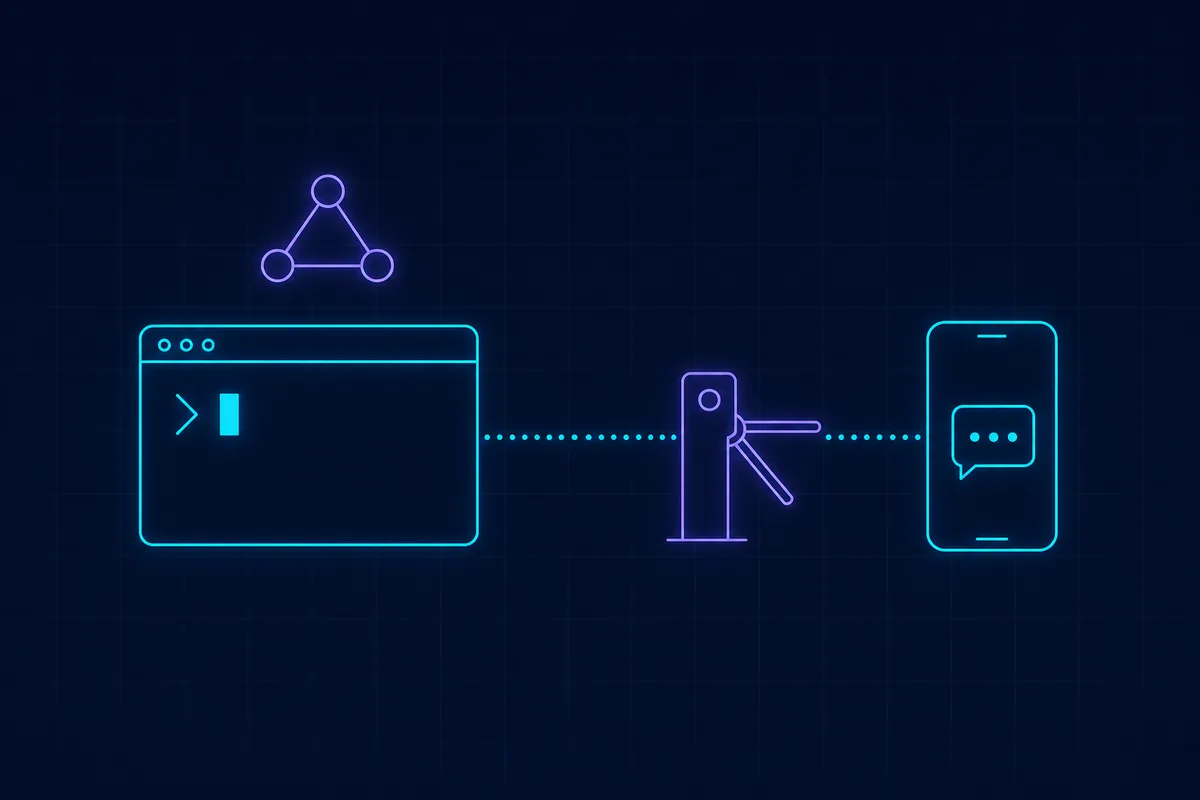
Where the gate actually sits
| Tool | Account lives at | Phone verification | Range sensitivity | Main obstacle |
|---|---|---|---|---|
| Codex (CLI and cloud) | OpenAI | Effectively unavoidable at signup | High — VoIP and pool ranges struggle | Cap on accounts per number |
| Claude Code | Anthropic | Common | Medium-high, prefers real mobile ranges | Regional availability, payment |
| GitHub Copilot | GitHub | Triggered by risk signals | Medium | Subscription and org seat assignment |
| Cursor | Own account plus social login | Rare on direct signup | — | Google login moves the gate to Google |
The table describes which layer performs the check, not a promise about any given day. Policies shift often; what does not shift is that the gate belongs to the platform, never to the tool.
Why searching for a “Codex SMS platform” leads nowhere
Codex is not a separate account system. Whether you use the CLI, an editor extension or the web entry point, you are signing in to the same OpenAI account. Which means:
- There is no such thing as a provider that “receives Codex codes” — the text comes from OpenAI.
- What you actually need is a number that clears OpenAI’s phone check.
What OpenAI is filtering on
- Range classification. A clear preference for real mobile carrier ranges. VoIP and heavily recycled pool ranges are often refused before a message is dispatched. Background in what is a non-VoIP number and phone number reputation.
- Accounts per number. A single number can only verify a limited number of accounts, after which further attempts error out.
- Number country versus your IP. A wide gap invites extra checks, and a data-centre IP makes it worse.
- Resend throttling. Repeatedly pressing resend drops you into a cool-down — see “too many verification attempts”.
The full order for chasing a missing code is in SMS not arriving on the platform.
Claude Code runs on an Anthropic account
Claude Code is a terminal tool, but signing in opens a browser to complete authorisation and then hands control back to the CLI. Phone verification happens in that browser step, never in the terminal. The logic matches the Claude web signup, described in Claude signup phone verification.
GitHub Copilot sits under a GitHub account
Copilot performs no verification of its own; it inherits whatever GitHub asks for. GitHub typically requests a number at signup, on unusual logins, or when enabling two-factor authentication — see GitHub phone verification. Enterprise and organisation seats are assigned by an admin, and that layer has nothing to do with numbers.
Cursor and the social-login knock-on effect
Cursor accepts email signup and social login. Choosing Google looks like the shortcut, but it relocates the entire gate to your Google account — and Google runs the strictest phone check of the group. See registering Google with an SMS platform.
The counterintuitive part is worth stating plainly: social login does not skip verification, it moves it, and it usually moves it somewhere harder. The same pattern shows up with Google’s own AI products, covered in Google Gemini phone verification, and with other AI signups such as Perplexity.
Matching the number to the goal
| Goal | What to use |
|---|---|
| One working account | A real mobile range; per-code pool numbers have a visibly lower hit rate |
| Long-term use, device changes likely | A number you can keep holding — see how to get a foreign phone number |
| Several seats on a team | One dedicated number per seat, never shared |
| Just evaluating | Check whether email plus social login gets you in without a code at all |
The general platform workflow is in the overseas SMS verification tutorial, and the long-hold comparison is in real SIM vs virtual numbers.
Three misconceptions
- “Some providers have a dedicated Codex channel.” They do not. OpenAI sends the message; a provider only supplies the number. Anyone advertising otherwise is worth vetting with how to vet an obscure SMS platform.
- “A different provider will receive it.” If the refusal is about range type, a different provider with the same range type produces the same result.
- “CLI tools skip phone verification.” The CLI is only a client. Verification happens at the account layer regardless of which client you use.
Wrapping up
Separate the tool from the account. Codex, Claude Code, Copilot and Cursor are four clients sitting on top of OpenAI, Anthropic, GitHub and — frequently — Google. Phone verification always happens at the account layer, so pick your number based on whose gate you are facing: OpenAI and Google are the fussiest about ranges, Anthropic sits in the middle, GitHub is comparatively relaxed. Working out which one is actually blocking you beats cycling through ten providers. Selection criteria are in overseas SMS platform recommendations.