 SimSmsBox
 Quick answer: Most one-time codes are six digits because it’s the sweet spot between security and usability. Six digits give a million combinations — hard enough to guess within the short window before the code expires, yet short enough to read from a text and type without errors. Fewer digits would be too easy to brute-force; more would annoy users for little added safety once rate limiting is in place. Six is a deliberate balance, not an accident.
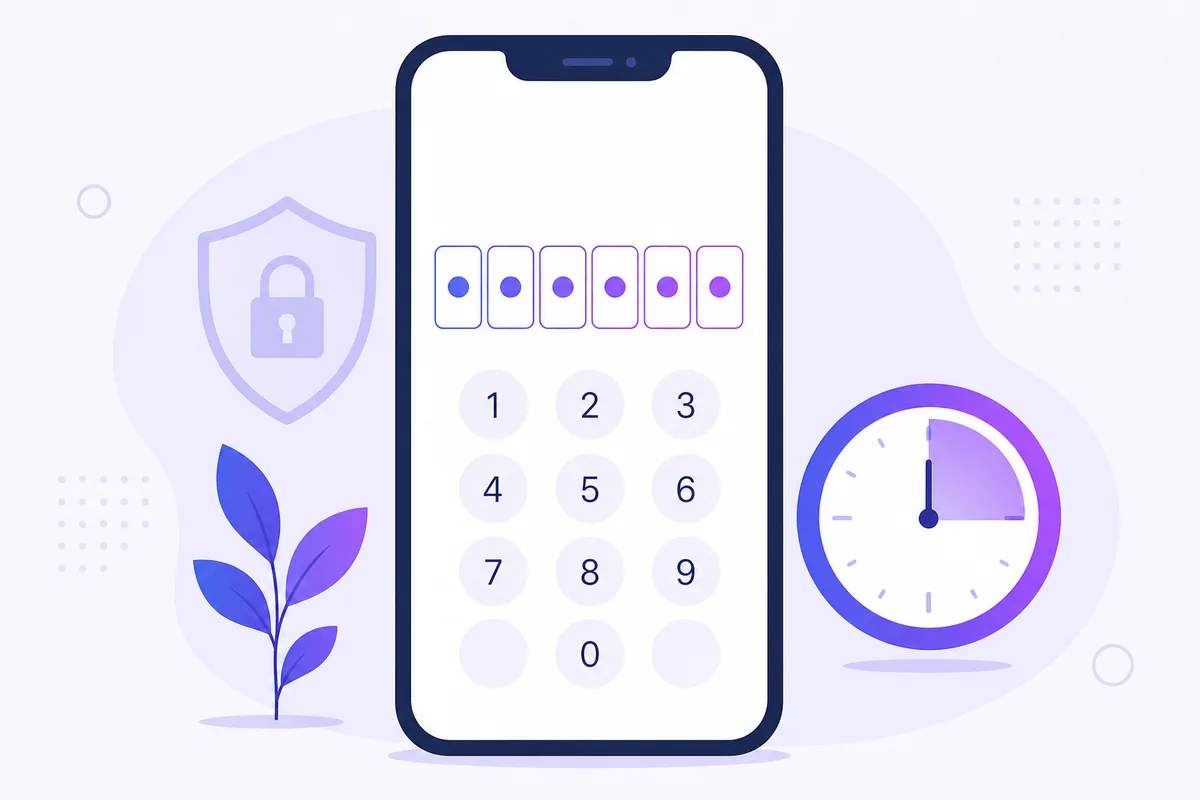
You’ve typed thousands of them: six little digits from a text or an app. Why always six? Not five, not eight? The answer is a neat piece of security design where math, human memory, and attack defenses all meet. Here’s why six became the standard length for a one-time code.
1. The math: a million guesses
A six-digit code has 1,000,000 possible values (000000–999999). To a casual attacker guessing blindly, the odds of hitting the right one on a single try are one in a million. Combine that with a code that expires in ~30–60 seconds and a limit on wrong attempts, and guessing becomes impractical.
Shorter codes weaken this fast: a four-digit code has only 10,000 combinations — far easier to brute-force if defenses slip. Six digits push the guess space high enough that the time limit and attempt limit do the rest.
2. The human side: readable and typeable
Security alone would favor longer codes, but people have to read and enter these. Cognitive research on short-term memory (the classic “seven, plus or minus two” chunks) suggests six digits sit comfortably within what someone can hold in mind while glancing from a text to a form.
| Code length | Guess space | Usability |
|---|---|---|
| 4 digits | 10,000 | Very easy, weak |
| 6 digits | 1,000,000 | Easy, strong enough |
| 8 digits | 100,000,000 | Stronger, error-prone |
Six is where “secure enough” meets “won’t fat-finger it.” That balance is also why features like SMS OTP autofill exist — to remove even the small friction of typing them.
3. Why more digits aren’t automatically better
Once a system enforces expiry and blocks repeated wrong tries — the rate limiting that stops brute force — extra digits add little real-world security while raising typos and frustration. The biggest OTP risks aren’t guessing at all; they’re social engineering like OTP bot scams and phishing, where the attacker gets you to hand the code over. No code length defends against that.
So the length is tuned for the guessing threat, while the human threats are handled by “never share a code you didn’t request.”
4. What this means if you receive codes online
The six-digit format is the same whether a code reaches a physical SIM or an online number — the length is set by the service, not your phone. When you receive codes online without a SIM, you’ll see the same familiar six digits (or occasionally four, seven, or eight for particular services).
The practical note: type the code promptly, since the short expiry window that makes six digits safe also means a slow copy-paste can let it lapse. Grab it, enter it, done.
FAQ
Q: Are all OTP codes six digits? No — six is the most common, but you’ll see four, seven, or eight depending on the service. Authenticator-app TOTP codes are usually six.
Q: Would a longer code be safer? Marginally, but once expiry and attempt limits are enforced, extra digits mainly add typos. The real risks are phishing and scams, which length can’t stop.
Q: Why does the code expire so fast? The short window is part of the security: it shrinks the time an attacker has to guess or reuse a code, which is what lets six digits be enough.
Takeaway
Six digits is the deliberate balance point: a million combinations is hard to brute-force within a short expiry, yet easy to read and type. More digits add little safety once rate limits exist, so the format is tuned for guessing attacks — while the codes you receive, online or on a SIM, look the same six digits everywhere.