 SimSmsBox
 Quick answer: CPaaS (Communications Platform as a Service) is a cloud service that lets developers add messaging, voice, and verification to their apps through APIs — without building or operating telecom infrastructure. Instead of negotiating with carriers and running SMS gateways, you call an API to send a text or verify a phone number. Twilio, Vonage, and MessageBird are well-known CPaaS providers; the SMS verification codes you receive are very often sent through one.
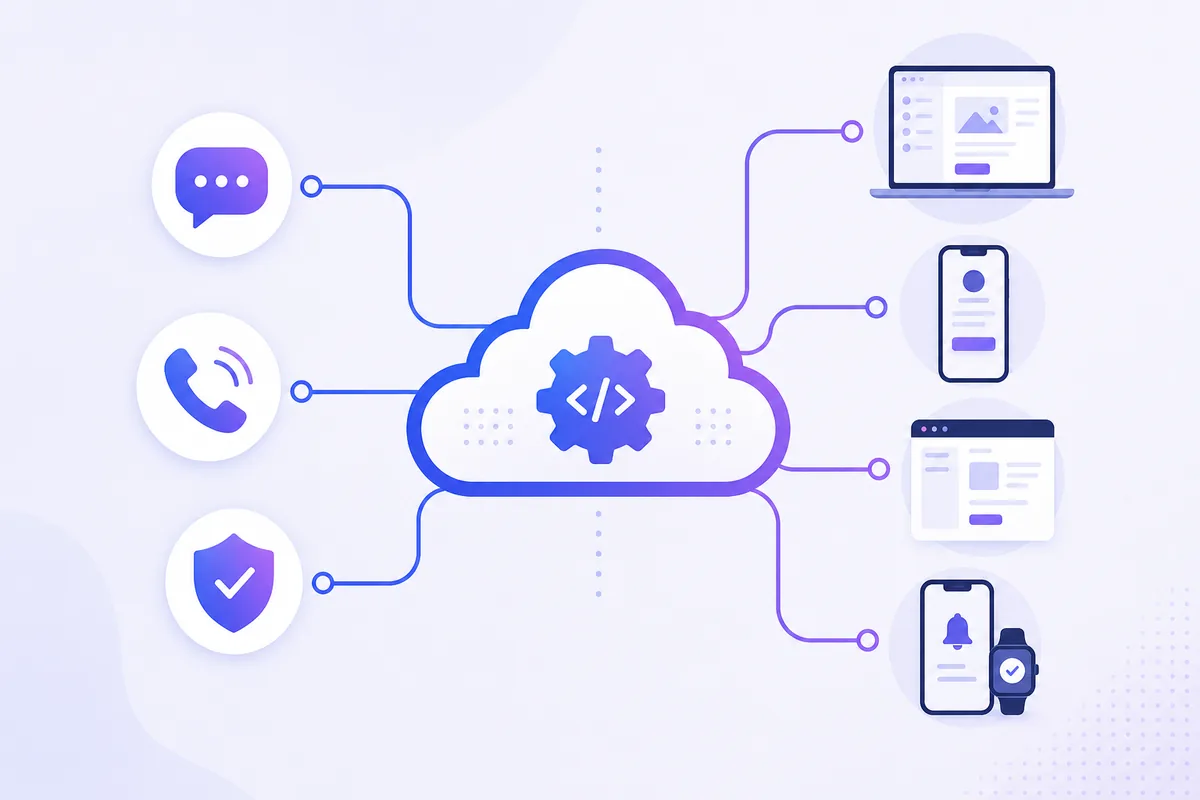
Every app that texts you a login code, calls to confirm a delivery, or sends an appointment reminder needs a way to reach the phone network. Almost none of them build that themselves — they use a CPaaS. Here’s what that means and why it quietly powers most of the verification messages you receive.
1. What CPaaS means
CPaaS stands for Communications Platform as a Service. It’s cloud infrastructure that exposes communication channels — SMS, voice, WhatsApp, email, verification — as developer-friendly APIs. A developer writes a few lines of code to send a message or place a call, and the CPaaS handles the messy parts: carrier connections, routing, delivery, and compliance.
The “as a service” part is the point: like cloud hosting freed companies from running their own servers, CPaaS frees them from running their own telecom stack. You rent the capability by API call instead of building it.
2. What problem it solves
Connecting directly to the phone network is genuinely hard:
| Do it yourself | Use a CPaaS |
|---|---|
| Negotiate carrier agreements | Sign up, get an API key |
| Build SMS/voice gateways | Call a REST API |
| Handle 10DLC, sender IDs, compliance | Provider manages it |
| Manage global routing | Provider’s network handles it |
| Months of work | Live in an afternoon |
This is why a startup can add phone verification in a day: the CPaaS already did the years of infrastructure work. It’s the same category as an SMS verification API, which is essentially the verification-focused slice of CPaaS.
3. Where verification fits
Verification is one of the most popular CPaaS use cases. Many providers offer a dedicated verification API that generates the code, sends it via SMS (with voice or WhatsApp fallback), and checks what the user entered — so the developer never handles code generation or delivery routing directly.
That means when you get a “your code is 123456” text, it very likely traveled: app → CPaaS API → carrier network → your phone. The brand you’re verifying with owns the account; the CPaaS moved the message.
4. What this means if you receive codes online
CPaaS is the sending side of the pipeline — it’s how businesses dispatch codes, not how you receive them. When you receive a code online, you’re on the destination end of a message a CPaaS very likely sent. The two are complementary halves of the same journey.
This also explains delivery quirks you might notice while receiving: whether a code arrives quickly, gets filtered by a carrier, or falls back to a voice call is largely decided by the sending CPaaS’s routing and configuration. As a recipient you can’t change that side — but knowing a CPaaS sits behind most codes clarifies why deliverability varies from service to service.
FAQ
Q: Is CPaaS the same as an SMS API? An SMS API is one part of CPaaS. CPaaS is the broader platform covering SMS, voice, verification, WhatsApp, and more; an SMS-only or verification-only API is a focused slice of it.
Q: Do the verification codes I receive come from a CPaaS? Very often, yes. Most companies don’t connect to carriers directly; they send codes through a CPaaS provider that handles routing and delivery.
Q: Do I need a CPaaS to receive codes? No — CPaaS is for businesses sending messages. As a user you just receive them, whether on a SIM or an online number.
Takeaway
CPaaS is cloud infrastructure that lets apps add SMS, voice, and verification via APIs instead of building telecom systems themselves. It’s the sending half of the pipeline: most codes you receive were dispatched through a CPaaS, so when you receive one online you’re simply on the destination end of that same journey.