 SimSmsBox
 Quick answer: Phone number masking hides your real number behind a temporary proxy number so two people can call or text without seeing each other’s actual digits — the way ride-share and delivery apps connect a driver and customer. The platform routes the conversation through a middle number, protecting privacy on both sides. It’s a business-facing feature, distinct from simply using a separate number to receive verification codes.
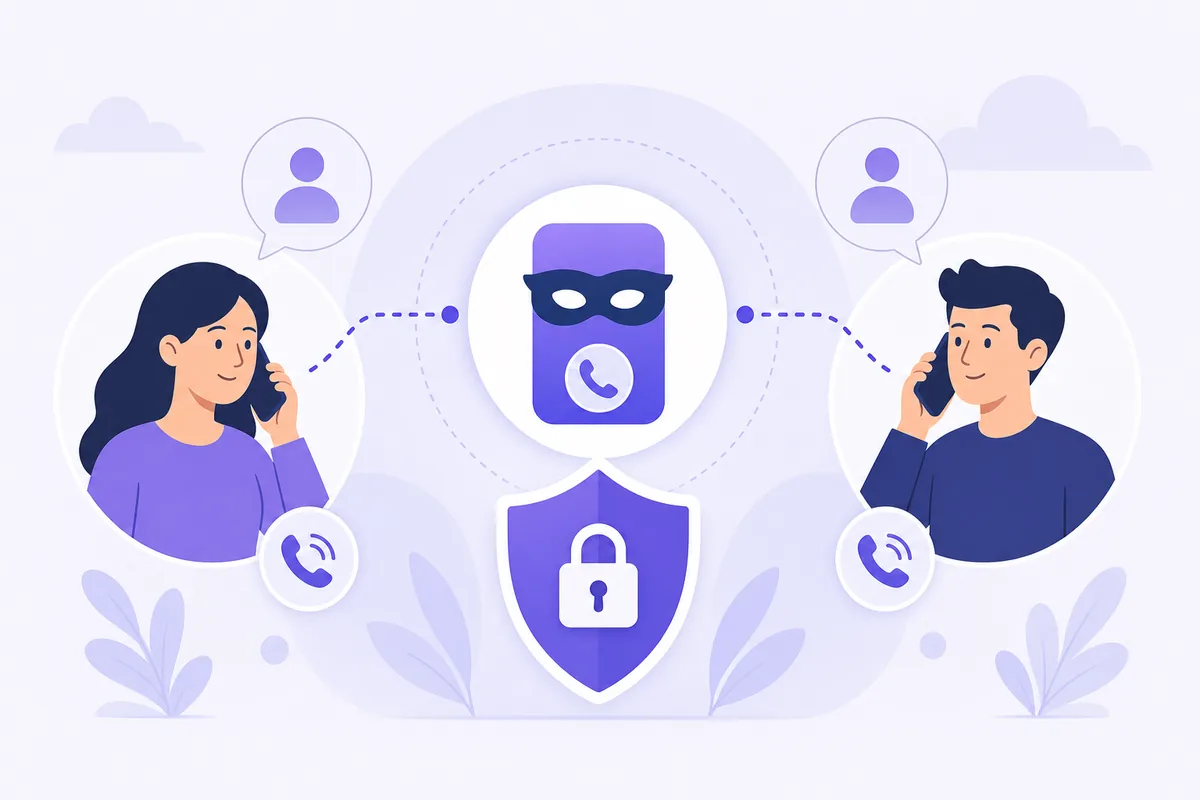
When your food-delivery courier calls, you talk normally — but neither of you ever learns the other’s real phone number. That’s phone number masking: a proxy number sits in the middle so the conversation happens without exposing personal digits. Here’s how it works and where it fits among privacy tools.
1. How number masking works
Masking uses a proxy number as a relay:
- The platform assigns a temporary number to a transaction (a ride, a delivery, a listing).
- When one party calls or texts that number, the platform forwards it to the other party’s real number.
- Each side sees only the proxy, never the other’s actual number.
- When the transaction ends, the proxy is released — often reused later for someone else.
The real numbers exist and receive the calls; they’re just never revealed. The platform acts as a switchboard that knows both numbers and connects them privately.
2. Why businesses use it
Masking solves a specific privacy problem in two-sided marketplaces:
| Without masking | With masking |
|---|---|
| Driver sees customer’s real number | Both see only a proxy |
| Contact continues after the job | Contact ends with the transaction |
| Personal numbers exposed & harvestable | Real numbers stay private |
| Harassment risk after the fact | Proxy is released, breaking the link |
Ride-share, delivery, classifieds, and dating apps rely on it so users can coordinate without handing strangers their permanent number.
3. Masking vs. a separate number for privacy
People often conflate masking with just “using another number,” but they’re different tools:
- Number masking is a business feature: the platform runs the proxy and routes a live two-way conversation between two known parties.
- Using a separate number is a user choice: you personally keep your main number off a form by protecting your privacy with a different number for sign-ups and codes.
Both limit exposure of your primary number, but masking is orchestrated by the service for a specific interaction, while a separate number is something you control for your own accounts.
4. What this means if you receive codes online
Number masking is about live conversations between two people, so it’s a different mechanism from receiving verification codes online, which is a one-way, automated message to a number you control. Don’t expect a masking proxy to catch your OTPs — that’s not what it’s for.
The overlap is the underlying goal: keeping your personal number out of places it doesn’t belong. If your aim is to sign up or verify without exposing your primary number, a separate receiving number addresses that directly; masking, by contrast, protects you specifically during two-way interactions a platform sets up. Matching the tool to the goal avoids the common mix-up.
FAQ
Q: Is phone number masking the same as caller ID blocking? No. Caller ID blocking hides your number when you place a call; masking runs a proxy number that relays a two-way conversation so neither party sees the other’s real number.
Q: Can I use masking to receive verification codes? Generally no — masking is a business feature for connecting two people in a live conversation, not a way to catch automated one-way OTPs. For that, use a number you control.
Q: Who sets up the proxy number? The platform (e.g., the ride-share or delivery app), not the users. It assigns, routes, and later releases the proxy automatically.
Takeaway
Phone number masking puts a proxy number between two people so they can talk or text without revealing their real numbers — a business feature powering ride-share and delivery apps. It’s distinct from receiving codes online: masking handles two-way conversations, while a separate receiving number handles one-way verification. Match the tool to the goal.