 SimSmsBox
 Quick answer: 2FA (two-factor authentication) uses exactly two factors to verify you. MFA (multi-factor authentication) uses two or more. So 2FA is simply the most common form of MFA — every 2FA setup is MFA, but MFA can add a third or fourth factor for higher-security accounts. In everyday consumer logins, “MFA” and “2FA” usually mean the same thing: your password plus one more check, most often an SMS code.
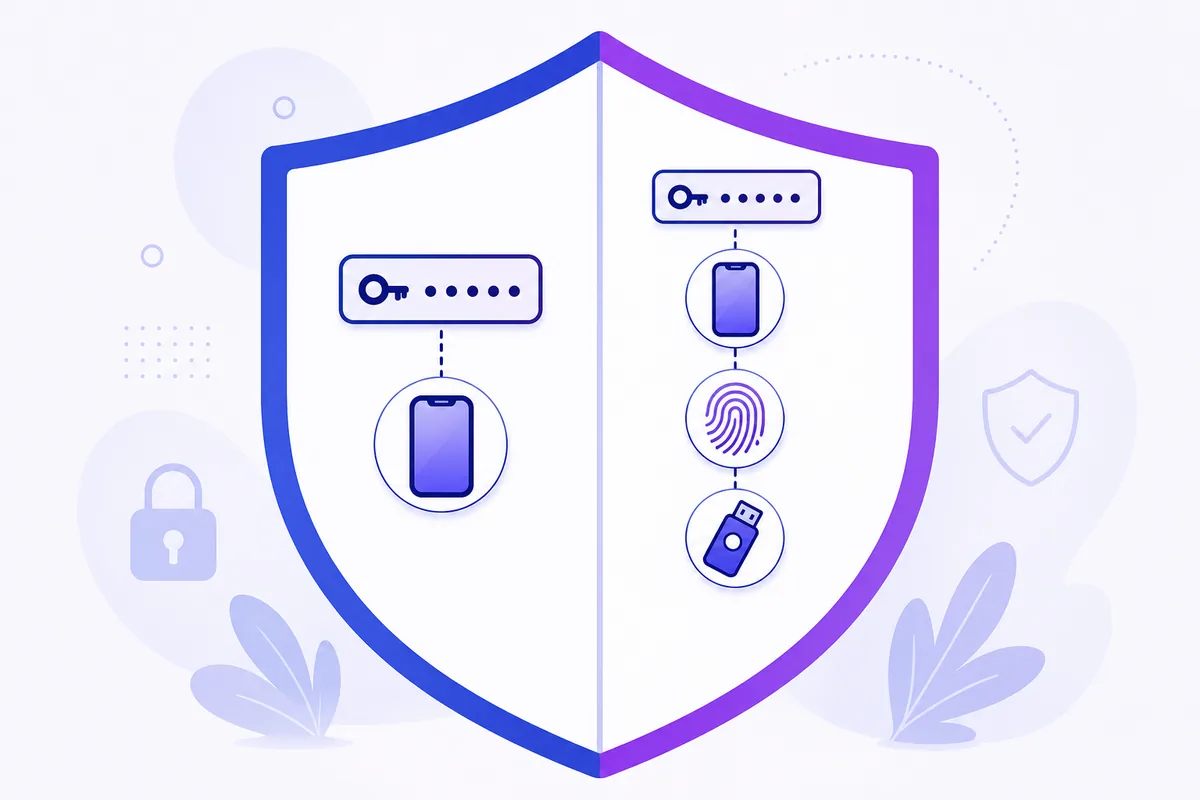
Security vendors love “MFA,” while most people say “2FA” — and the two get used interchangeably in marketing. There’s a real but simple distinction hiding underneath, and it comes down to counting. Here’s what separates MFA from 2FA and why it rarely changes anything for a normal login.
1. It’s a matter of how many factors
Authentication factors fall into categories: something you know (password), something you have (phone, key), something you are (fingerprint, face). The names just count how many you require:
- 2FA: exactly two factors — e.g. password + SMS code.
- MFA: two or more — could be two, or password + app code + hardware key.
So 2FA is a subset of MFA. Claiming a product “supports MFA” can mean it does plain 2FA, or that it can stack additional factors for sensitive roles.
2. When a third factor is worth it
Two factors already block the vast majority of attacks — a stolen password alone is useless without the second factor. A third factor delivers diminishing returns for most people but matters for high-value targets:
| Scenario | Typical choice |
|---|---|
| Everyday consumer account | 2FA (password + code) |
| Work account with sensitive data | MFA (add app or key) |
| Admin / privileged access | MFA (password + key + biometric) |
| Banking / crypto | MFA, ideally with a possession factor |
The guiding idea: match the number of factors to the value of what you’re protecting, not to the fanciest available option. This is the same logic behind choosing an authenticator app or passkey for your most critical accounts.
3. Why “MFA” and “2FA” blur together
For consumer services, the second factor is almost always where security jumps the most — from one factor to two. Adding factors beyond that is rarer outside enterprise settings. That’s why a bank labeling its login “MFA” and a friend calling the same thing “2FA” are both right; the marketing term and the everyday term describe one password-plus-a-code flow. The distinction that matters more in practice is which factor you add, not how many — an idea explored in 2SV vs 2FA.
4. What this means if you receive codes online
Whether a service calls it MFA or 2FA, the practical question is the same one that decides everything else: is one of the factors a texted code? If so, an online number can complete it — that’s what makes receiving codes online without a SIM work for these logins.
If MFA stacks factors that aren’t phone-based — an authenticator app, a passkey, a hardware key — there’s no message to receive, so an online number isn’t part of that step. When one of the factors is “text me a code,” that’s the phone-number-based piece an online service handles.
FAQ
Q: Is MFA more secure than 2FA? MFA with three or more factors is marginally stronger, but the biggest jump is going from one factor to two. For most accounts, 2FA is plenty; extra factors mainly help high-value targets.
Q: Is 2FA a type of MFA? Yes. 2FA is MFA with exactly two factors. All 2FA is MFA, but MFA can use more than two.
Q: Does an SMS code count toward MFA? Yes — a password plus an SMS code is two factors from different categories, which is genuine multi-factor authentication.
Takeaway
2FA uses two factors; MFA uses two or more — so 2FA is just the everyday form of MFA, and the terms are used interchangeably for consumer logins. What matters more than the count is which factor you add, and if one of them is a texted code, an online number can receive it.