 SimSmsBox
 “Which domestic SMS platforms exist?” usually mixes three different needs: enterprise SMS sending, +86 receive-code numbers, and overseas numbers for foreign apps. Pick the wrong bucket and delivery fails even if the provider is fine.
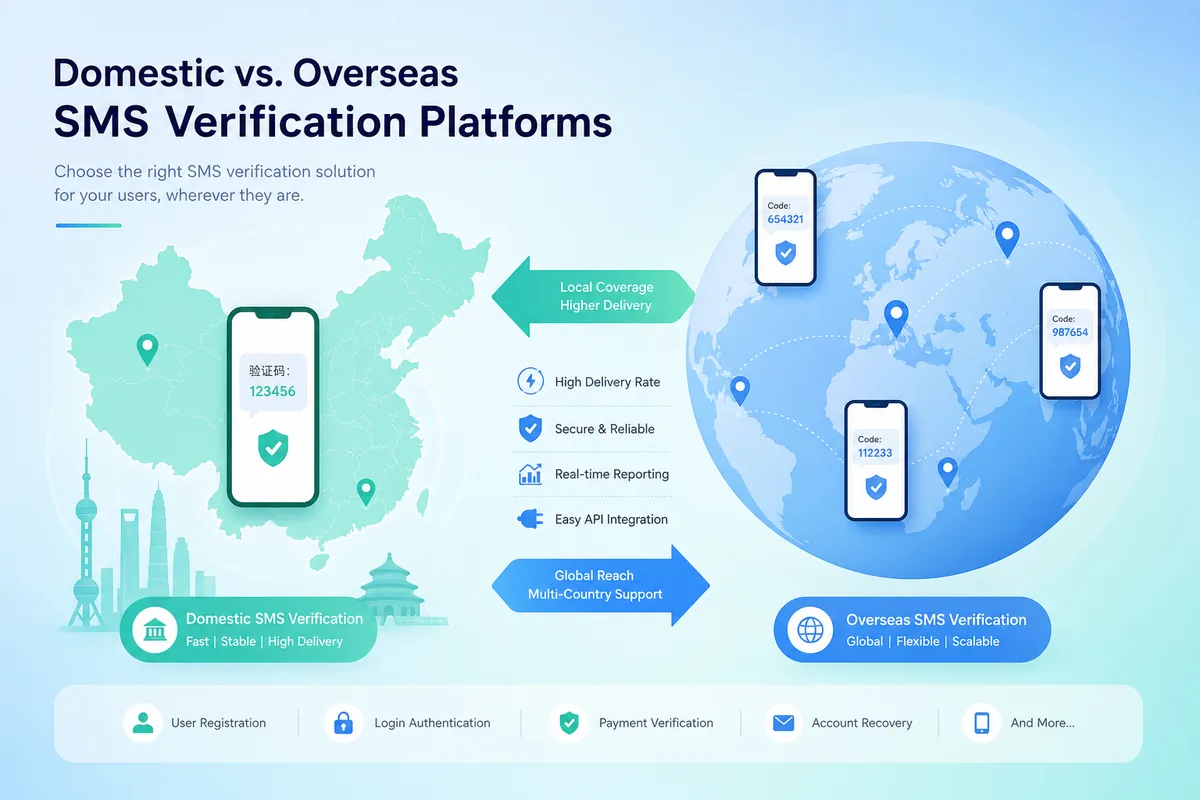
Three things people mean by “domestic”
| Type | What it is | Typical use |
|---|---|---|
| Domestic SMS gateway | Business sends OTPs to users | Your app’s outbound OTP |
| Domestic receive-code ranges | +86 numbers that receive SMS | Local site signup / testing |
| Overseas SMS platforms | Multi-country receive numbers | Foreign app verification |
Domestic number vs overseas number
- Risk / reachability: many overseas apps throttle or reject +86; local sites often prefer it.
- Product shape: enterprise gateways send SMS; receive-code platforms receive OTPs.
- Pricing / stock: overseas real-SIM pricing is usually clearer by country + service.
When a domestic number fits
- Testing your own product’s China SMS route.
- Signing up for services that expect +86 and accept it.
- Explicit +86 requirements in a compliant workflow.
When overseas SMS verification fits better
- Messaging apps, cross-border ecommerce, and other services unfriendly to China ranges.
- Multi-country coverage and API bulk ordering.
- Keeping your personal long-term number private.
For selection criteria, see How to choose an SMS platform. For real SIM vs virtual, see Real SIM vs virtual numbers.
Wrap-up
Don’t start with a brand list — start with the scenario (local site vs overseas app), then the range (+86 vs overseas), then delivery rate and billing rules. Step-by-step: How to use an SMS platform.